Search

Stone Soup Living

a lifestyle blog for people without a lifestyle

Meditations on Cherry Picking

Cherry picking is a strangely addictive activity. I first discovered this over a decade ago when we moved into our current home. Our suburban property had been largely neglected, but there were several fruit trees out back, one of which turned out to be a fruiting cherry. I quickly discovered that ours were the tart variety, the kind that glow bright red, not deep burgundy, when ripe and that most people (myself included) don’t like them much eaten straight off the tree. While they are too sour for most, they make wonderful pies and jams and other things I soon discovered to my delight. I quickly found, too, how easily you grow attached to a tree; the inordinate love that something familiar and good— not necessarily impressive, but unmistakably and happily yours —can inspire. Until then, I had never thought much or understood where the term cherry picking came from; now I knew. Cherries did not grow on my tree in clusters, like I have seen them do in orchards of Bing cherry trees. Mine grew mostly in pairs, scattered among the branches. You had to look at each individual cherry before you plucked it; often a fully ripe cherry was hanging next to a paler, unready specimen–every cherry I picked was individually seen and chosen. Given the location of the tree in my yard and its average output, I was obliged to bring a ladder out back to reach most of the fruit. My husband often watched, his concern mounting, as I climbed higher and more precariously up the ladder to reach the most abundant and choicest fruit. It was a strange and mysterious summons, the calling to keep picking. I cannot fully explain what it is: the desire to reach everything, to get every piece of fruit you possibly can. It’s not a perfectionistic tendency; any reasonable person knows you cannot possibly pick all the fruit (nor would you want to, since many cherries get pecked at or split and rot on the branch). It’s something else, some deep-seated need to get it all, to reach fullness. It’s particularly striking with a tart cherry tree because so few of us are interested in eating the cherries fresh. There is no immediate gratification: you are not satisfying a true biological hunger. But as my daughter put it, every time you pick a piece, you see another beautiful cherry on another branch, urging you on. Tart cherries are particularly lovely in the sunshine: glowing little orbs, sparkling against their dark branches and green leaves, beckoning like bright berries on a tree.

We go apple picking every year, too (as does most of suburban America, as far as I can tell). I enjoy it very much, and the experience of wandering orchards with my children and friends is a lovely early-fall activity. But apple picking is much simpler and less compulsive. Apples are big, and our bags and baskets quickly fill up, without much attention or trouble. Nevertheless, the experience of fruiting trees—on your own property or someone else’s—points to something else striking: the absolutely absurd output of any fruit tree. There is always so much left over. My daughter was bothered by it the last time we went picking—there seemed to be so much waste (food waste gets to her like it does to me). I reminded her that it’s always like this—trees give so much fruit, you can never get to it all, or get to it in time. It’s always dropping off and feeding the soil or local animals or whatever is around. It’s almost comical, the disproportion between the tree’s abundance and anyone’s ability to really receive all that it bears.  

Some years ago, my cherry tree died. I suspect its demise was hastened by some careless pruning a couple of landscapers did, when they trimmed the lower (and easier to reach!) branches. But the tree might not have made it anyway. Its loss set me on a committed quest to find tart cherries somewhere. My family and I had grown used to the annual cherry jam and pie and tarts and while nothing could console me for the loss of my tree, getting my hands on some of its fruit was better than nothing. I quickly discovered that tart cherries are next to impossible to buy near my home in southeastern PA, despite the abundance of local farms and a climate well-suited to cherry trees. I am friendly with some local grocers and I put in special requests for my beloved tart fruit, but to no avail. No one has confirmed my hypothesis, but it’s easy to see why sour cherries are so difficult to find: they are not at all mass-market friendly.  Aside from their taste, tart cherries are small and extremely soft, making them harder and more expensive to ship. They rot much faster than Bing or Rainier cherries; they’re hard to deal with. So it’s not surprising that in our era of modern convenience, they’ve pretty much disappeared from stores. They are a funny sort of cherry, too: when I first realized how much output I got from my tree, I bought a cherry pitter. I quickly saw that it was useless on my little fruits: their flesh was so soft I could only pit them with my bare hands.  They needed a human touch.

Finally, a couple of summers ago, I found a local farm that grows tart cherries, where I could pick or even buy them. So we’ve made it an annual sort of pilgrimage: the kids and I go out to the orchard in late June and get lunch and pick cherries. I focus on the tart cherries, they pick the sweet ones. The kids fight most of the way there, they sometimes argue the whole time we’re eating. But while we’re picking fruit, the animosity is temporarily suspended and life hangs happily:  full, bright, and waiting to be received.
Delusions of grandeur: Breaking it gently

A friend of mine is a nurse in a local hospital.  She’s a thoughtful and kind person and was saying that one of the hardest parts of her job right now is talking to families. Usually families can come in and see their loved ones and so they know when the end is near; it doesn’t need to be spoken. But since Covid protocols are keeping everyone away, it’s her job to break it to the families. 

Whom she’s never met. On the phone. Compassionately.  It’s an extraordinarily tall order, and it has taken a great toll on her. Breaking hard truths to people about their loved ones is a hard job. 

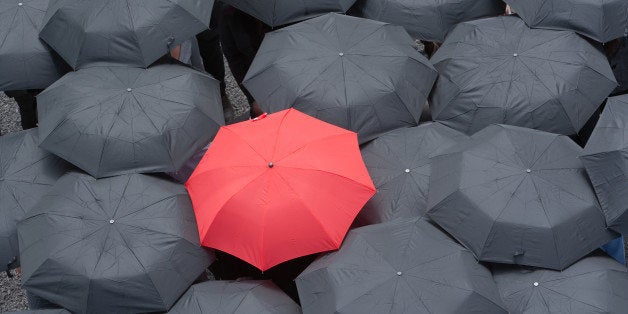
A few years ago, I had a conversation with a teacher I greatly admire. We were discussing a school policy regarding honors programs and I was expressing my disagreement with the criteria used (though my own child met the criteria, I didn’t think it was fair–it was a principle question, not a personal one). I don’t remember if she agreed with me or not, but she explained that sometimes these arbitrary-seeming criteria are meant in part to discourage parents who claim to know better than all their teachers. An extraordinary number of  parents –she assured me– are convinced that their children are gifted and must, necessarily, be allowed into whatever upper-level program is available. She noted how difficult it is to burst parents’ bubbles on this front, since they tend to be very attached to their views on their kids and it’s hard to disagree without seeming harsh or hostile or unappreciative of the kids. Breaking hard truths to parents about their kids is a hard job. I was wondering why this problem so common now- according to teachers, it’s much more common these days for parents to have inflated ideas of their kids’ skills and abilities. Parents love their kids, obviously, and of course we parents find our kids cuter and more loveable than others do…but I think something more is at play. 

I’ve got several thousand a couple of theories. One is that it connects to our devaluation of the human person.  I can say that my child is wonderful because she exists,  that the irrepeatable nature of her being is enough to make her special to me. She is a gift because she *is* (even if her behavior sometimes makes me wonder….). If she happens to be good at something –or  even great—that’s terrific, but that isn’t what makes her important to me.

But these days, we don’t really think that people are valuable in themselves. We may say it but we don’t really believe it in our bones. For us, life is precious because of what we make of it, or because of how we live it or what we achieve, but not because we are. It’s all potentiality, not actuality. Existence itself is….just existing. Nothing special in that. And so we are forced to invent find special talents in our children so that we can claim their greatness. Their existence isn’t enough for us.  They have to have *potential* and the only way for that potential to be there is to claim they are gifted, or special—somehow, better than other kids. In this way, many of us parents end up modeling a competitive, delusional, self-aggrandizing model of behavior.  And while I don’t think it’s the only reason for the spike in kids’ anxiety these days, I think it’s part of it. Because our kids are required to keep up the appearance of being different, special, better.  When they are already a wonder by the very virtue of their existence. 

Make like an oyster: A meditation on small shells and irritants

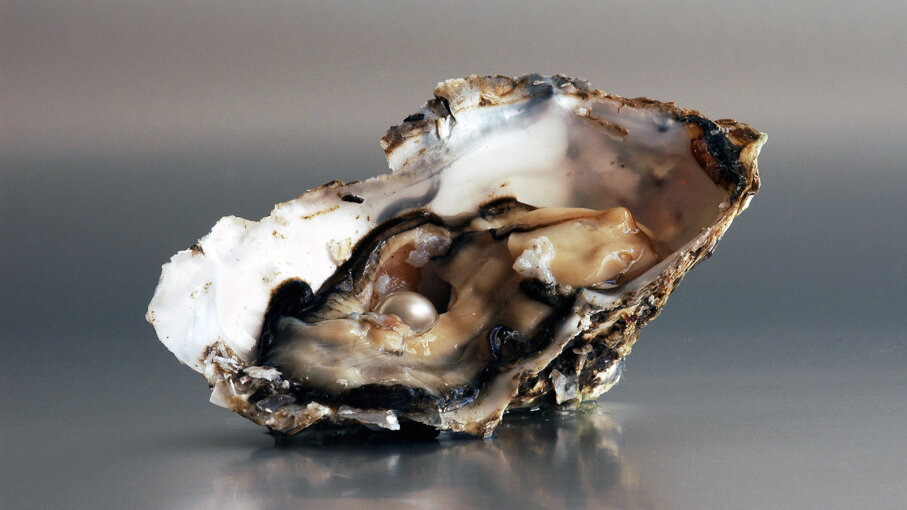
I’d always heard that pearls were started by grains of sand…But my more recent random googling  extensive research suggests that more often it’s parasites. Even better for my purposes. These irritants get into oyster shells and they bother the oyster; they bother the oyster so much that the oyster produces a fluid –nacre– to coat the parasite and (presumably) keep it from being so irritating. But I suppose it doesn’t work as well as the oyster would have hoped, since the oyster continues to add layers of nacre to the already-encrusted parasite, which make it bigger and bigger, resulting in larger and larger pearls.  

(I would think that having a large, coated parasite in a relatively small shell would be just as annoying as having a smaller uncoated parasite in the same space, but who knows? I’m not an oyster so I’m not sure what’s worse).  

What fascinates me about this whole process is that it seems like the parasite never stops being irritating to the oyster. And the oyster is, presumably, unaware of what its attempts to avoid irritation are creating. The oyster is not trying to be creative; it’s just trying to protect itself. It never sees the beauty of the fruits of its labor, which are not even deliberately creative—they’re merely defensive. But all that effort is creating something spectacularly beautiful, something precious to the eyes of the world. The oyster never sees what everyone else does. 

What other irritants, what other parasites are out there right now– just waiting to become pearls? 

On Having a Not-So-Great Profile Pic and Adding Value IRL

Way back when I first started teaching, I would sometimes make reference to the fact that there are some people who look better in photographs than they do in real life. Twenty years ago, that wasn’t always something that people recognized right away, since we didn’t have so many photographs in our lives before we all had smart phones. Sometimes I had to explain this concept to my students and challenge them to look around and see what I meant. These days, however, if I make the same reference, everyone knows exactly what I mean. Everyone knows plenty of people whose photographs are amazing (read: deceptive). Our photographs have almost become our advertisements for #MyBestLife and #MyBestSelf.

A few summers ago, I had the experience of teaching Italian online (on purpose, Pre-Covid). I had never met any of my students before and saw them only online, every day, for six weeks. I never had them in class again, but I passed a few of them in the hallways in the semester afterwards and recognized them. But they looked so much better in real life—duh, they were real!

About a year ago I had a conversation with an unmarried friend of mine about photo curating for online platforms. I totally get that it’s a challenge. If you are meeting people on-line, you worry that someone will simply swipe left if your photograph is deemed Not Hot Enough. I don’t envy anyone that situation. But still, I think there is something useful about being better looking in real life than in your profile. I know it’s not good advertising, but isn’t there something about someone meeting you for the first and thinking, “Wow, this person is so much *more* attractive in real life”? Wouldn’t you rather be adding value in person? Isn’t there something exciting about that? Almost makes you think reality itself is something good.

I don’t know what will happen, but I hold out hope that this will become more obvious in PCE (Post-Covid Era): the sense that seeing people in the flesh is something pretty great in itself.

In the meantime, I think I’m changing my Zoom photo. Too many people have told me it’s a great picture of me. I know what that means 🙂

A Wasteful God

Like many foreign visitors to European cathedrals, I have been amazed by stories of their construction: the time, the energy, the money, the love that went into building them. I remember one story in particular from visiting’s Florence’s duomo, the lovely, brick-domed Santa Maria dei Fiori.  Our tour guide explained some of the intricacies of the work inside the cathedral. There were many beautiful creations in parts of the building where the artisans’ efforts would never be seen by anyone. People had asked one such laborer why he would go to such trouble for something no one would ever see. “God sees,” was his reply. What seems like a waste—of effort, of time, ultimately, of self—was not a waste in his eyes. 

It’s hard for me not to be struck by what feels like tremendous waste present in the Covid pandemic. Milk, food, beer (good beer, people!) spoiling or going unused; people who prepared so much for events that will never happen, so many talented people who just have to sit this game out: there is so much that seems to be for nought. While it’s a great mercy for us North Americans that the pandemic struck in spring–at least we can go outside!– I keep thinking how much of it feels wasted. Spring is so extraordinarily beautiful, and short, and so much of it is going unseen. All over the world, people spent all year planning magnificent gardens, and their short season is now. No visitors may enter those gardens. But the fact that we can’t be there to witness the gardens’ magnificence, that we don’t see them, doesn’t mean they are wasted. From the Pacific Northwest to Holland, thousands of tulips are turning enormous fields into a riot of color. The tulips don’t need an audience to bloom: they go on, radiantly beautiful just the same. 

In the Gospels, one of the people who complains most vociferously about waste is Judas, when he sees a woman using precious nard to bathe Jesus’ feet. Judas measures everything and is bothered by the extravagance wasted on Jesus’s feet.  Judas thinks he understands—it’s his undoing and his tragedy– he think he knows waste when he sees it, but he doesn’t.  You can only say something has been wasted if it a) isn’t used at all and/or b) it is under- or mis-used—used on something beneath its dignity. His error was not recognizing what—and who—was truly precious. Who am I to say that all this waste isn’t for something bigger and better, something I cannot understand or see—but is there, just the same, in spite of me? 

Exodus 180º: Pushing the Reset Button on the World

By Gary Larson

At the beginning of 2020 I heard about a religious program aimed at adult Christian men called Exodus 90.  Some friends started telling me about their meetings and their spirituality. The Exodus 90 website explains that “Exodus provides a path to freedom through prayer, asceticism, and fraternity.” From the guy friends who committed to the program, I learned of their ascetic practices, like avoiding sweets, alcohol, and unnecessary purchases; cutting out TV and screen time; and getting regular physical exercise (plus cold showers!) The friendship component is key: men check in with each other regularly for moral support and encouragement. It’s called Exodus because the prayer component is focused on reading the biblical book of Exodus with daily reflections.  I was curious about the “90” part, though. Why 90 days? A friend explained—and a visit to their website confirmed—that it was considered the amount of time necessary to break old habits and start news ones effectively.

When we first went into lockdown with Covid 19, I found myself thinking about Exodus 90. Funny, since a) I’m not a guy and b) I’m not sure it’s my type of spirituality. But I kept thinking about it anyway. First, because I had Exodus on the brain. It was Lent after all, so Passover was coming. Then, on a phone call, a priest friend started talking very explicitly about the book of Exodus and the experience of the Israelites during that time. During those forty long years they were being led out of Egypt and into the Promised Land, they followed the Lord. Not like, “they did what he said,” but literally. They physically followed God, who manifested himself as a pillar of cloud by day and of fire by night so that there would be no trouble seeing him. (Gee, thanks, God? An excuse might have been nice). And that pillar marked the Israelites’ travel—where the pillar went, they followed. But, naturally, that pillar was unpredictable. Sometimes that pillar of fire had them moving camp in the middle of the night when it would have been much more comfortable to stay put –or the pillar of cloud had them pitch tent when they could have pressed on. It was no walk in the park following the God-Pillar.  Following a reality utterly beyond your control is taxing. It requires attention, willingness, flexibility, and patience. We usually find a way out of following after a certain point—it’s just too much.  It’s easier to imagine where we *think* the pillar will take us tomorrow– or next year–and focus on that. We find some easier thing and follow that instead, and still call it following. (Examples abound in Exodus and elsewhere). I don’t know about you, but this coronavirus thing is so mysterious that it feels a lot like following a cloud.

My thoughts were also drawn to Exodus 90 because of the time frame. At first, I thought (so naively, in retrospect!) we weren’t going to hit the 90-day mark with Covid quarantines. But now we’re half-way there and it looks like we will get to the full three months plus without things going back to normal. Ninety days: long enough to reset habits. All over our country, all over the world, people have broken their regular patterns of behavior.  Everyone, everywhere, is hitting reset. There has been disruption in our economy, our educational systems, our health care, and our homes…the list goes on. The world is making a 180-degree turn. But towards what?

This is where the most mysterious part comes in: when we come to the end of The Time of Covid, where will we be? Will we reach the Promised Land, or will we still be stuck in the desert?  Only time—and the pillar of cloud—can tell.

Life triumphs and the dressing that goes with it

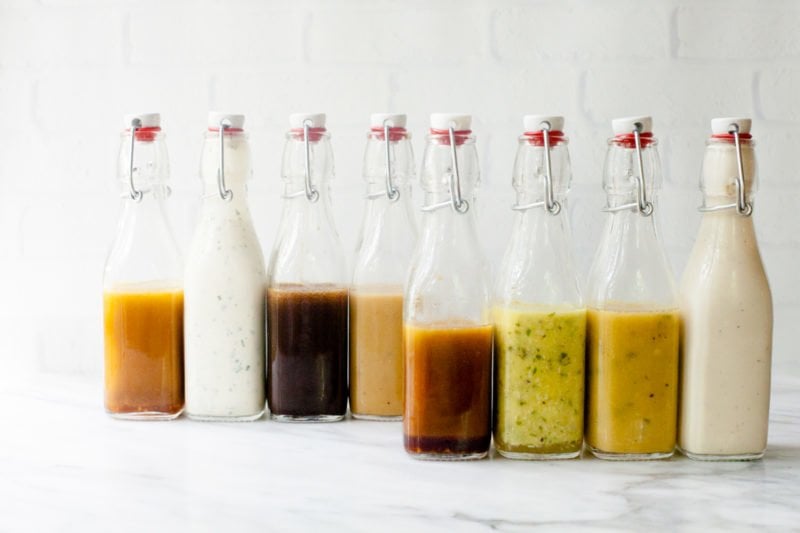
8 Healthy Salad Dressing Recipes You Should Make at Home | Wholefully

One of my personal life triumphs—of the minor kind that will never gain me entrance into Heaven or any worldly substitute like graduate school or the Nobel Peace Prize—happened one day when I brought my son to the pediatrician’s. You know how the pediatrician (and I like my practice!) unwitting sets you up for failure?  They ask questions like they did that day. Innocent-seeming, secretly loaded questions they pose to your children, like, “What are your favorite foods?” That day, my son Peter, who was probably all of six at the time, answered honestly. He said, “Fish and salad.” I could have died there; my life was complete. His doctor, determined to find the dark underbelly (or perhaps, normal kid gene hiding in there somewhere), asked him if he liked pizza. “I’m not such a big fan of pizza,” he answered. Which prompted a much longer and strangely pleasant medical conversation. Now, friends, you should know (lest you think my son is a total mutant from crazy-land), that we were in a phase where all the pizza he got was homemade. He is NOT a fan of the pizza I was making (though it’s gotten better, I swear!). And the fish thing was great while it lasted, but he’s not so into it these days. But salad he still loves. I have a lot of thoughts about salad, most of which I’ll spare you  share some other day.  But let me just start with this: find a dressing you love. If you find a dressing you love, you will eat a lot more salad, because you will like it. That is why my son loves salad: he loves poppyseed dressing. Lettuce is OK (romaine, please friends, for the love of God, give your kids romaine not limp rotting spring mix), but dressing is delightful. Sweeten the deal and reap the rewards.

And for all you haters out there who say cranky things like “dressing kills the point of eating salad,” go ahead—post your comments below and we’ll discuss! If you have your own favorite–please add in the comments!

Here are a few of my favorites:

  1. Peanut lime: https://www.budgetbytes.com/peanut-lime-dressing/

(I used to make this one, but I have a hard time with raw onion these days. But it’s delicious if you’re ok with that! https://www.allrecipes.com/recipe/24872/poppyseed-dressing/ )

  • Lazy girl aioli: add a teaspoon of minced fresh garlic to a quarter cup of mayonnaise, mixing thoroughly.

It doesn’t suck and other life lessons

Once, years ago, my husband and I were dinner guests at some old friends’—a married couple with a daughter the same age as one of our girls. We reminisced about our house hunts in that strangely nostalgic way you can remember things that were not so pleasant at the time. Both families had ended up in the same town, in houses that were –how should we say it? -less than ideal. Before finding our actual home, we had seen our share of dirty golf green carpets and thick wallpaper and “fixer uppers” –minus the charm of the Gaines’ old farmsteads and fresh eggs. In order words, we’d seen a lot we knew we didn’t want. My friend noted that her first words on entering her now-home were, “It doesn’t suck.” They ended up buying that house and –while it was less than perfect—being very happy there.

I think about her words often. There are a lot of times when you’re dealing with situations where most of the alternatives seem terrible. Moments when the best you can do is find a solution that isn’t going to kill you. I thought about this recently while talking with my oldest daughter about running in the Time of Covid. Neither of us particularly enjoy running—in sharp contrast to my husband, who has always loved it. We do it because we can, even when all the gyms are closed and other options have largely dried up. I barely squeak out 3 slow miles, but my daughter runs 4-5 miles most days. My daughter told me that her (relative) enthusiasm for running came in the wake of her attempts at rowing crew. Rowing on ergs was so brutal that running emerged as an almost delightful alternative. Her relative enthusiasm for running started two years ago and has kept her going since then.

Sometimes “it doesn’t suck” is all you need to get by. It may be a better place to start than you think.

Because baking starts now (or already did): Saturday and Easter Sunday!

http://acontinualfeastcontinued.blogspot.com/2010/04/holy-saturday-to-easter-sunday.html

Create a free website or blog at WordPress.com.

Up ↑

Design a site like this with WordPress.com
Get started